Reliable Chemistry , Trusted Supply

About us

Quality Assurance

Stringent quality control systems throughout production, from raw material inspection to final product testing, ensuring batch-to-batch consistency and reliability.

Certified Compliance

Full industry certifications including ISO, REACH, and GMP standards, with complete traceability and documentation for regulatory peace of mind.

Global Delivery Network

Efficient international logistics covering major ports worldwide, with reliable warehousing and just-in-time shipping to keep your production on schedule.

Environmental Stewardship

Green chemistry initiatives, waste reduction processes, and energy-efficient operations that minimize environmental impact while maintaining output quality.

Anhui Sealong Biotechnology Co., Ltd

About us

Anhui Sealong Biotechnology Co., Ltd. is a research and development, production and sales of new materials, functional food additives and biodegradation of high-tech joint-stock enterprises, the company is located in...
Read more
12h
After-Sales Response
99%
Delivery Rate
100%
Factory-Exit QC
99%
On-Time Delivery
Anhui Sealong Biotechnology Co., Ltd

Need a Custom Solution?

Our products are just the starting point. If you have specific technical requirements or are looking for a custom formulation, our engineering team is ready to work with you. Tell us

Inquire

Our Products

The range of products we manufacture and provide to our customers includes Food & Nutrient Additives, Biodegradable Polymers, Polyester Resin, along with all kinds of necessary resources and supplies for engineering, manufacturing and other industrial spheres.

Sustainability

As a forward-thinking chemical manufacturer, we recognize that true industrial leadership comes with environmental responsibility. Our sustainability framework integrates green chemistry principles, carbon footprint reduction strategies, and responsible sourcing practices into every stage of production — from raw material procurement to final product delivery.

We are continuously innovating to develop eco-friendlier solutions without compromising performance or safety. By investing in advanced emission control systems, renewable energy adoption, and waste valorization technologies, we are proving that chemical manufacturing can be both profitable and sustainable.

Because protecting our planet is the most important product we will ever create.

Latest Company News

Anhui Sealong Biotechnology Co., Ltd.
Running a chemical plant is not like flipping a switch. Every step, from fermentation tanks to finished product, demands attention. The talk about Anhui Sealong Biotechnology Co., Ltd. has been increasing. Some outside the industry see big factories and picture rows of faceless workers and humming machines. Yet real progress in our field means constant troubleshooting and adaptation based on what works. In our factory, one issue after another ends up on the desk, whether it's traced to inconsistent raw materials or transport trucks stuck in local traffic. When other manufacturers succeed, it usually means they keep solving problems on the ground, not just on spreadsheets.Innovation builds on relentless iterations. Factories like ours and those of Sealong Biotechnology don’t patent effort alone. It takes experimentation on the production line, hands stained from trial batches, and eyes blurry from late-night process monitoring. Whether dealing with biological fermentation or more traditional organic synthesis, changes in raw material quality impact yield and purity. People in the corporate offices sometimes overlook how much grit is required to consistently produce product to spec. It takes trained operators and engineers who know their equipment and have the stubborn discipline to run a process for days until it stabilizes. The value isn’t simply from technology, but from the team’s experience with what can go wrong when running batch after batch.Everyone in the industry knows that a talk about science always leads back to trucks and containers. As manufacturers, the best process in the world cannot overcome late trucks, sealed borders, or surprise regulatory shifts. For Anhui Sealong and our own operation, experience has shown that upstream relationships—farmers for fermentable feedstocks, logistics partners, regional regulators—occupy as much energy as the chemistry. Keeping a line running without interruption means regular checking with corn starch suppliers or working through local trade association meetings to be sure new transport rules don’t interrupt shipments. Many outside the field underestimate how much human-to-human negotiation determines whether raw materials show up on time or if a line sits idle.In biotechnology, small changes create outsized effects. From the supplier’s side, variables such as water content in raw starch, or a stray microbe in inoculum, mean entire tanks can run off-spec. Our own engineers remember cases where a single shipment of contaminated water threw off a month’s production plan. Firms like Anhui Sealong likely face the same unexpected disruptions. Solving these problems never stops at a single corrective action. Routine investment in on-site analytics and refining quality inspection pays off more than any one new fermenter. Over years, it’s this insistence on troubleshooting and data-driven corrections that sets consistent suppliers apart. Buyers who demand unbroken quality push us to invest in continuous staff training and to control processes in a way government inspections will never fully capture.No modern manufacturer stands alone. Cooperation with universities and technical institutes lets us tap into emerging research and test it at industrial scale. Companies with the vision to develop custom processes need both a scientific team willing to experiment and partners willing to let them run pilot projects. This cycle—experiment, scale up, feed real-world data back into formulation—pushes the whole sector forward. Collaboration isn’t just a PR line; it’s a necessity to avoid being sidelined by sudden shifts in regulations or customer preference. In the last five years, we’ve seen national environmental targets lead to stricter emissions controls. Reacting quickly has mattered more than any one piece of intellectual property.Many Chinese manufacturers, including Sealong, now work far beyond domestic markets. Exporting to customers around the globe introduces frequent audits and heightened traceability demands. Certification schemes force deeper documentation and honest tracking from raw materials to packaged goods. Stories from the ground show that diligence builds trust: repeated visits from overseas buyers, third-party sampling, even drone flyovers. What clients want above all is confidence that what leaves the plant matches the spec agreed on the contract. In our experience, it’s not just the product but the conduct—following safety rules, listening to feedback, adapting processes—that wins long-term business. A single careless moment can erase credibility earned over years.True sustainability starts by examining what happens inside the facility’s gates. Disposal of waste streams, recapture of solvents, proper treatment of water—all these tasks demand up-front capital and ongoing oversight. The public learns about accidents quickly. Reputation for safe operation is more precious than any line-item profit in a quarterly report. Investment in automation and control systems offers a buffer against human error, but needs solid training back-up to realize safety gains. Incremental upgrades—installing closed-loop systems, retrofitting gas capture units—have become minimum requirements rather than selling points. This approach reflects priority to avoid short-term gains at the expense of long-term public goodwill.Firms endure in this sector by making thoughtful choices day after day. Consistent investment in the skills of the workforce, standards-based operating procedures, and stable partnerships with downstream buyers delivers the steady performance that sustains export contracts and keeps lines productive year-round. The future belongs to companies treating each improvement as a building block rather than the final word. Newer entrants studying the practices of established firms like Anhui Sealong will notice the emphasis on daily improvement and accountability over mere expansion. This approach, built on persistent adaptation and open communication in daily work, is rewriting the playbook for sustainable growth in chemical and biotechnology manufacturing.
Read More
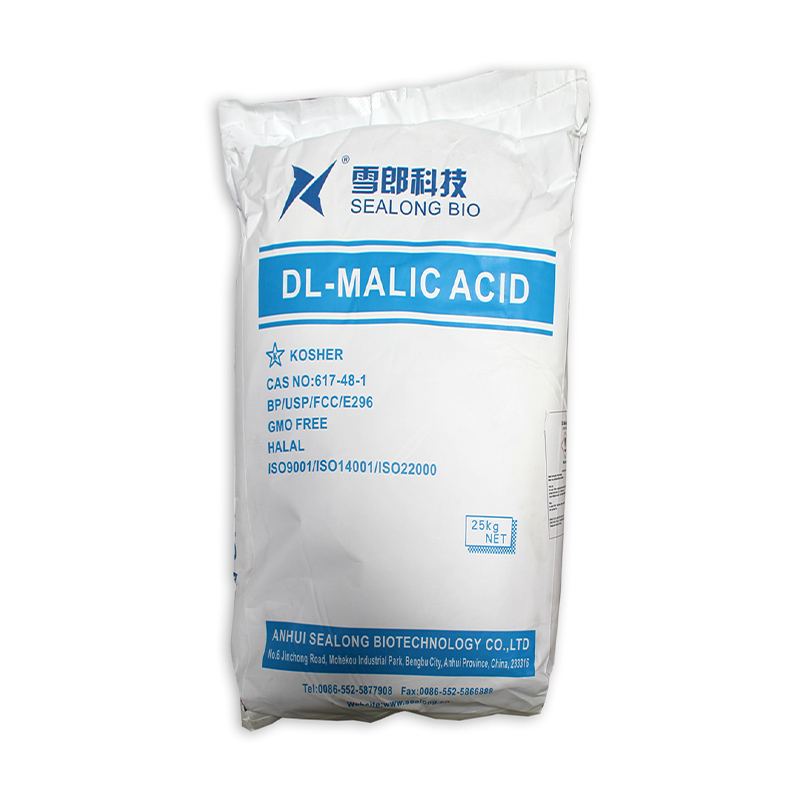
Sealong Malic Acid
Sealong Malic Acid
As a chemical manufacturer, producing malic acid puts you in direct contact with both the science and the realities of industry needs. Over years on the line, we've learned that a consistently reliable source of raw materials is as important as any piece of equipment. For malic acid, that means knowing our supply chain inside out, so every bag or drum going out the door contains exactly what food producers and formulators expect. Variation in purity, moisture, or particle size quickly turns into production headaches for our customers. It took investment in filtration, crystallization, and drying systems, but reducing those variables has paid off by lowering the risk of product recalls and batch failures. We see fewer complaints about caking in humid climates or inconsistent acidity. All the lab upgrades and technician training have a direct link to the reputation of malic acid in global markets.We see firsthand that even a small slip on the manufacturing line can have a big impact downstream. The best intentions count for little without rigorous batch control, and our internal audits keep us on our toes. Simple actions, like calibrating process controls and monitoring crystallizer temperatures, prevent off-spec material long before it reaches packaging. Sometimes an hour of extra filter maintenance makes the difference between a lot that triggers customer downgrades and a lot that passes without a hitch. Customers have told us directly how defects like off-color crystals or unusual taste create extra hurdles in soft drinks or candies. That's why we don't cut corners on the cleaning cycles or the sampling rounds. Trust is built on knowing what's in the bag every single time, and that starts with accountability in production, not just paperwork.Malic acid plays a distinct role in many sectors, but for food and beverage, the sensory profile remains the main driver of demand. We saw a spike in artisan food brands wanting cleaner labels, pushing us to improve both the granule uniformity and solubility profile. Achieving a fine balance between fast dissolution and extended shelf performance required significant R&D. Our chemists pushed for new settings in the centrifuge and worked nights to hit the right crystal morphology. As regulatory reviews get stricter, traceability and transparency stand out even more. Our team fields questions about even minute production details—crystallizer temperature logs, downstream water sources, filtration cut-points—which means everything gets documented to the last decimal. That effort doesn’t happen in a vacuum. The way malic acid is handled in our plant shapes the confidence of both multinational companies and local startup brands experimenting with new flavors or supplement formats.Production brings challenges from unexpected places, and the biggest lessons come from the rare batch failures. Sometimes a change in the incoming fumaric acid purity forced us to pause lines and redesign parts of our process to avoid unwanted byproducts. Another year, increased local humidity led to caking and flowability problems, driving us to install better dehumidifiers and redesign our packaging protocols. Solutions usually mean spending more on equipment upgrades, process recalibration, or extra testing, but delivering a consistent product year-round justifies these choices. Even details like batch coding and advanced track-and-trace offer value by speeding up root-cause analysis during rare customer issues. Teams from the sales side often work closely with plant engineers so feedback never gets lost between departments—this tight loop keeps the product moving forward and the reputation strong.Standing still is not an option in chemical manufacturing. Over time, new technologies such as inline process analytics and automation in batch monitoring have improved how we reduce waste and increase yield. Early upgrades taught us that throwing machinery at a problem rarely worked unless the floor staff understood the chemistry involved. Regular training, team briefings, and a willingness to revisit standard operating procedures helped us avoid repeating past mistakes. The increased demand for non-GMO and allergen-free variants saw us overhaul our raw material sourcing, prompting new partnerships with vetted suppliers. These changes did not happen overnight—they required ongoing collaboration between R&D, procurement, and quality groups. For each kilogram of Sealong malic acid that meets global standards, there’s a long chain of testing, cleaning, and adjusting behind the scenes.Many of our long-term customers have toured our facility, walked the production lines, and talked face-to-face with the staff grinding and packaging malic acid. That kind of transparency builds trust. Food scientists, purchasing managers, and regulators want context for every certification we hold—they ask for not just a certificate, but the story behind the numbers. Sometimes, a routine factory visit uncovers small inefficiencies or cross-communication issues among our teams. Each time we address those issues, the reliability of Sealong malic acid improves. Every success in refining quality control, eliminating contamination risks, or shortening response times comes from paying attention to these real-world interactions with our customers. It is not just about lab results and batch numbers; it’s about responding to changing market demands, new research on food safety, and evolving environmental regulations. Every improvement is driven by actual feedback, and our ability to listen and adapt keeps the product trusted in kitchens, factories, and labs across the globe.Chemical manufacturing never stops evolving. New regulations, environmental concerns, and shifting consumer expectations create both hurdles and opportunities. From our viewpoint, facing those challenges means sharing experience across teams. As regulatory pressure around sustainability rises, we've invested in water recycling, greener process aids, and ways to cut energy use—all steps that started with suggestions from our plant staff. Meeting rising expectations for transparency doesn’t start in a boardroom; it happens daily, with every audit, safety drill, and customer visit. Our engineers and operators shape improvements, not management memos. The steady growth of Sealong malic acid comes from living those values every day. Consistency, traceability, and the willingness to solve new problems set the foundation for future growth as customers trust the product to deliver under ever-tighter standards.
Read More
Anhui Sealong Biological Gene Industry Technology Company
In the chemical manufacturing business, real innovation doesn’t come from reading headlines. It comes from years in the lab, long hours at the plant, listening to tough feedback from partners, and backing up bold claims with solid data. Looking at Anhui Sealong Biological Gene Industry Technology Company, one thing stands out: the ambition to reshape the biotechnological landscape in China isn’t just a talking point. This ambition pulls in folks like us—seasoned chemical producers who know the sweat that goes into every kilo of specialty ingredient. We see manufacturers talking about “biological gene industry” with a sense of pride, but the real value comes from those mornings troubleshooting fermenters, batch after batch, making sure product quality isn’t just a line in a brochure. Their scientists seem to invest in more than R&D; they invest in reliability, adapting production lines to handle new biologicals, scaling up from bench to plant floor, balancing yield and purity, and responding to tough regulatory demands. It’s the kind of persistent, practical focus we respect, because we live it every day.Sustainability often sounds like a marketing term, yet for every chemical producer worth their salt it’s a bottom-line issue that directly affects operations and customer trust. In the wake of environmental challenges and tightening regulations, watching a firm like Anhui Sealong invest in greener bioprocesses sends the right signals. We know what it means to optimize feedstocks, minimize solvents, and keep emissions within ever-shrinking thresholds. These are not simple adjustments—they require multi-year planning, capital investments, and a willingness to jog production or even shut down lines to get it right. Hearing that Sealong runs on bio-based production instead of fossil-derived methods means they’re making similar tough calls. The cost isn’t just in money but in retraining staff, redesigning processes, and constantly tweaking parameters. In our experience, customers notice this difference because it leads to cleaner supply chains—a fact more international buyers demand with each passing year.Years spent exporting chemicals to buyers across Europe, North America, and Southeast Asia teach one lesson above all: passing audits means nothing if the culture doesn’t live compliance every day. Companies aiming for global reach face a maze of certifications and third-party inspections that go far beyond paper promises. Reports mention Anhui Sealong hitting milestones in international standardization—certifications for ISO quality management, environmental responsibility, and food safety. From our own audits, these aren’t simple to achieve. They demand integrated batch records, responsive QA, digital traceability, and a workforce attuned to the risk of even minor deviations. The drive to reach those standards changes not just the paperwork but the way every employee on the plant floor approaches their job, with managers investing in traceable logistics, up-to-date calibration, and digital process monitoring. Real producers spot these habits right away, because they mark the line between a trading company and a true manufacturer.A lab bench rarely looks like stock footage from a glossy PR video. Behind each press release about gene-based advances or fermentation tech, there’s a grind of applied science—the kind that walks a tricky path from concept through months of iterative scaling. Companies like Anhui Sealong pursue patents and tout technological breakthroughs in enzyme production, gene editing, and specialty applications, but in practice every new product means hitting setbacks, adjusting media formulations, and resolving scale-up failures before commercial quantities ever come out the other end. We spend countless hours doing similar work because time in process R&D translates into fewer failures during production and more consistent supply. In the chemical industry, shortcuts usually backfire. Experience teaches a deep respect for those who put the hours in at the bench and run pilot plants until the data proves a new bioproduct can actually perform in the field.Working in chemical manufacturing, partnerships don’t flourish on sales pitches; they grow through reliability—hit delivery dates, communicate early and honestly about changes in spec or supply, and go on-site when customers encounter trouble, whether or not a contract mandates it. Firms interested in cross-border deals look for these qualities before they even talk pricing. Anhui Sealong draws attention not only through new product launches but through the stories that reach the supply chain—stories about the ability to ramp up production for an emerging animal feed additive or process tailored nutraceuticals to meet export certifications in record time. These tales matter more than awards, because work in our plants teaches that repeat business depends on daily follow-through. Partners with nothing to hide invite regular audits, respond quickly to questions, and keep documentation updated and accessible, not buried in translation or bureaucracy.The best hardware and modern labs only deliver results when operators and technicians care about doing the job right. Training programs at a producer like Anhui Sealong shape output more than any single innovation. We see the difference in our own teams: frequent safety refreshers, practical troubleshooting drills, access to scientific learning—these investments pay back through reduced downtime and fewer recalls. Stories about Sealong’s universities-industry partnerships and technical training remind us that companies who build expertise from the ground up outperform competitors who treat staff as replaceable. The market rewards knowledge passed down the production line, not only clever molecules.Every year brings new supply disruptions—whether it’s raw material price swings, shipping delays, or geopolitical uncertainty. The companies that survive don’t pretend these challenges are distant. They attack logistics head-on: qualifying backup vendors, building inventory buffers for key intermediates, and keeping finance teams in tune with procurement realities. So, where Sealong establishes upstream integration or partners with local suppliers in Anhui, it echoes practices that keep real plants running during tough times. Buyers in the Americas or Europe often underestimate the daily juggling act that feeds finished product to their warehouse dock.As chemical manufacturers, respect goes to players who tackle challenges without drama—switching to renewable inputs, diving into digitization, or expanding advanced fermentation capacity all at once. These are expensive, high-stress moves requiring grit from operators, engineers, and management alike. Anhui Sealong’s choices shape China’s chemical and biotech future, setting a pace that partners further upstream and downstream must match. No shortcut replaces investing in your own hardware, hiring the right technical staff, and reconnecting production realities with customer demands, month after month.
Read More